
A RISC-V Phone: The Librem 5 v2 For the Win

Purism
Latest posts by Purism (see all)
- A RISC-V Phone: The Librem 5 v2 For the Win - November 18, 2026
- Purism Launches Librem 5 v2 , A RISC-V Phone to Empower People - November 17, 2026
- The First Step Toward Digital Independence: Why AweSIM Matters - October 20, 2026
For many people, a smartphone feels like an extra part of the body: it has a touchscreen, a camera, and internet access, while its operating system is controlled by one of a few big tech firms. That setup is convenient, but it also gives those firms power over the phone’s software, apps, updates, and hardware. Owners often have little say in those choices. Purism is making a RISC-V phone as an alternative.
The Librem 5 v2 offers another path. Purism is building it around a RISC-V processor. It will run PureOS. This is more than a new phone with different specifications. The Librem 5 v2 challenges the idea that phones must rely on Android or iOS.
Making the Librem 5 v2 on RISC-V is extremely ambitious. It is clear that substantial development work remains. This is where you come in: Fund it, get it, use it, and that ambition becomes reality. The idea is simple: give people more control over their technology.
Making A RISC-V Phone
RISC-V is an open standard for processor instructions. In simple terms, it defines the instructions a processor understands. Unlike proprietary architectures such as x86 and ARM, RISC-V publishes its specifications under permissive open-source licenses. Companies can therefore build processors without paying exorbitant royalties to use the instruction set or signing restrictive non-disclosure agreements to access it.
Purism sees RISC-V as a more open foundation for future development. Purism has spent years building our own path with the Librem 5 and PureOS. RISC-V can give developers more options and make devices easier to inspect—from the processor to the apps.
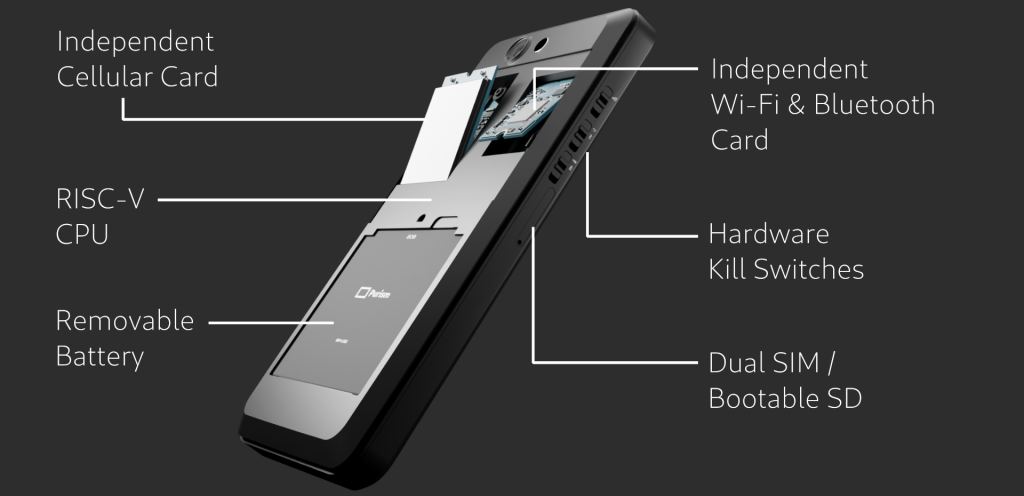
The planned Librem 5 v2 will use an eight-core RISC-V SpacemiT K1 processor. Purism’s earlier ARM-based Librem 5 and Liberty Phone helped establish our mobile platform. Purism now sees RISC-V as a better long-term foundation for greater transparency and user control.
This change will take time. An open instruction set creates new opportunities, but it does not create a finished phone on its own. Developers overall still need to improve firmware, drivers, graphics, power management, and apps.
A RISC-V Phone Built Around Ownership
The Librem 5 v2’s core idea is that owners should control their devices. The phone will run PureOS, a GNU/Linux-based operating system. It will not run Android or include Google’s Android code. All included software is free/libre and open source, and Purism will make the source code available.
This approach changes the relationship between users and their phones. Mainstream phones often work like sealed products, shaped by the companies that control their operating systems. Purism wants users to inspect and modify more of the system. The Librem 5 v2 lets users own their device. They do not need to accept terms of service or sign a contract just to use the phone.
Practical details matter as much as the principle. The Librem 5 v2 includes Purism’s signature hardware kill switches. They can disable cellular service, Wi-Fi and Bluetooth, and the microphone and cameras. The switches cut off these functions at the hardware level instead of relying only on software settings. They offer a clear, physical way to disable sensors and radios.
Like the Librem 5, the Librem 5 v2 also includes a removable battery and modular cards. Purism designed the modular system to support upgrades, development, and removal of parts. The phone will reuse the Librem 5 chassis, which can support repairs and upgrades. Owners may not need to replace the whole phone when one part wears out.
These features can help make the Librem 5 v2 more private and secure. But security also depends on software quality, updates, settings, and user habits. Compared with typical smartphones, the Librem 5 v2 gives users more direct control over the device.
The Hardware Specs for the Librem 5 v2
- Processor: Eight-core RISC-V SpacemiT K1
- Display: 5.7-inch, 720 × 1440
- Memory: 8 GB
- Storage: 128 GB
- Rear camera: 13 MP
- Front camera: 8 MP
- SIM: Dual SIM
- Battery: Removable, 4500 mAh
- Storage expansion: SD card, 80 MB/s
- Audio: 3.5 mm headphone jack
- Charging: USB-C
- Hardware kill switches: Cellular, WiFi and Bluetooth, Microphone and Cameras
- Hardware secret storage: Smart card slot
The Librem 5 v2 will improve on the first Librem 5 in several ways. It will have eight CPU cores instead of four, 8 GB of memory instead of 3 GB, dual SIM instead of single SIM, and a faster SD card interface. Purism expects these changes to help the phone run cooler, faster, and more efficiently. That will improve performance and battery life.
The team still needs to do extensive development and testing. In particular, it must improve the software that connects the processor, graphics, radios, cameras, and other parts to the operating system. This is where you come in: Fund it, get it, use it, and help make that work possible within the 15-month target.
PureOS and the App Gap
A phone is useful only if it can handle the tasks its owner needs. That creates a trade-off between convenience and control. PureOS is central to the Librem 5 v2’s approach. It includes apps for calling, messaging, browsing, contacts, the camera, photos, music, email, text editing, clocks, settings, and terminal access. The PureOS Store also offers apps such as Chromium, Thunderbird, GIMP, Calendar, Inkscape, and Weather.
Purism knows that people may rely on apps that were not designed for PureOS. The company plans to offer popular third-party apps as optional downloads inside secure sandboxes. A sandbox limits what an app can access. For example, a ride-booking app should not need access to a user’s camera roll to arrange a ride.
Purism plans to sandbox apps and services such as Spotify, Uber, Instagram, TikTok, Signal, WhatsApp, YouTube, LinkedIn, and Duolingo. Reaching the funding goal would help the team begin adding these apps before the phone ships. The company also plans to improve ARM64 compatibility, which could help more third-party apps run on the Librem 5 v2.
The Librem 5 v2 and PureOS aim to give users access to familiar apps while keeping those apps sandboxed. Sandboxing can limit an app’s reach and put users in control. The goal is to control the app, not let the app control you. PureOS aims to give users more control over apps, but it does not promise that every app will work just like it does on mainstream phones.
The Hard(ware) Work
A RISC-V phone cannot be built simply by choosing a processor and installing an operating system. The Librem 5 v2 still faces several major technical challenges.
First, the graphics system needs more work. It can display images, but it still needs full 3D support and better performance to make the phone responsive and easy to use. Graphics matter for more than games and visual effects. They also affect how smooth and efficient the everyday interface feels.
Second, many parts do not yet work with the main Linux kernel. Purism plans to adapt and port drivers from the RISC-V vendor’s Linux kernel. This work affects cameras, audio, connectivity, and other hardware features.
Third, ARM64 compatibility needs to improve. Some apps and services were built for ARM64 processors. To run them on a RISC-V phone, the team needs compatibility tools and efficient emulation. ARM64 emulation already exists, but it still needs more work.
The Soft(ware) Work
Browser speed is another challenge. Firefox supports RISC-V, including its JavaScript and WebAssembly compiler. But this support is relatively new and may need further optimization. Power management also needs investment. RISC-V power-management support is still relatively new, and developers need to improve it across the software stack.
These are not minor finishing touches. They are core parts of making the phone feel complete. The milestones include work on startup, graphics, Wi-Fi, cameras, sound, Bluetooth, cellular service, dual SIM, video decoding, USB-C, battery charging, web performance, and power use. The plan includes setting aside months for graphics acceleration and power optimization.
The Librem 5 v2 timeline reflects the scale of this work. Purism has a history of delivering, even against insurmountable odds. Purism expects to deliver the DevKit in six or seven months after the campaign ends. The Librem 5 v2 will be delivered 14 to 15 months after the campaign ends. Purism plans to iterate a few times before mass production, including a beta unit for backers who choose one.
Crowdfunding to Prove Interest
The Librem 5 v2 is funded by a crowdfunding campaign. This lets Purism gauge interest and start work as money comes in. But supporters take on risk. The campaign does not promise that rewards will arrive. Features could change or be cut. Costs could rise. The campaign does not offer refunds. Purism needs the funds to build what supporters expect.
A RISC-V phone is a hard project. A pledge is not a purchase of a finished phone. Delays, tech problems, and product changes may happen. Early beta phones may differ from the final model. They may also have bugs.
The Librem 5 v2 costs $1,599. A phone plan costs an extra $99 per month once the phone ships. You can also pay for the phone in monthly payments of $99.
If the campaign reaches its goal, the funds will support the work to bring RISC-V and PureOS to a phone. That work could help people who care about free software—even if they are not ready to use the Librem 5 v2 as their main phone right away.
The Audiences
The Librem 5 v2 is for people who want more control over their devices and are open to a different kind of phone. It appeals to Linux users, free software fans, privacy-minded customers, developers, and people curious about RISC-V. Its physical kill switches, removable battery, modular design, headphone jack, dual SIM, and bootable SD card set it apart.
Many other people also want to regain control from big tech companies. But they still need useful apps, an easy-to-use interface, and dependable support. These people are the people to help fund the campaign and build a future they have more say in.
The Librem 5 v2 matters beyond its eventual sales. It would show that RISC-V can power a phone for daily use—not just a development board or a specialized computer. It will also help developers improve Linux drivers, graphics, apps, and battery use. A lot of this work will also benefit the first Librem 5 and the wider free software community.
A Different Idea: Making a RISC-V Phone
The Librem 5 v2’s biggest ambition is to change what people expect from a phone. Rather than serving as a sealed gateway to services owned by others, it aims to provide hardware and software that users can inspect, modify, and repair. In that effort, RISC-V plays a key role by offering an open foundation for processor design. Even so, building a mature platform will require substantial engineering. Meanwhile, Purism remains committed to its broader goals.
To support that vision, the plan combines RISC-V with PureOS, physical switches for disabling radios and sensors, modular hardware, a removable battery, and efforts to limit third-party apps’ access. However, an alternative phone that respects its users must offer more than sound principles. It also needs working graphics, reliable connections, useful apps, adequate battery life, and a browser people can use every day.
For that reason, the Librem 5 crowdfunding campaign is both a product proposal and a development project. On one hand, its specifications and goals describe what Purism hopes to build; on the other, the roadmap and risk disclosures reveal how much work remains.
Ultimately, the Librem 5 v2 offers a distinctive vision for people who value control and open technology. The key question, then, is not merely whether RISC-V is promising, but whether you want to keep your digital freedom—or leave it in the hands of the tech giants.
Order yours now, and help us build the future.
Purism Products and Availability Chart
| Model | Status | Lead Time | ||
|---|---|---|---|---|
 | Librem Key (Made in USA) | Backorder ($59+) | Coming Soon | |
 | Liberty Phone (Made in USA Electronics) | Backorder ($1,999+) 4GB/128GB | Coming Soon | |
 | Librem 5 | Backorder ($799+) 3GB/32GB | Coming Soon | |
 | Librem 5 v2 | ($1599+) or ($129+$99/mo) 8GB/128GB | Crowdfunding | |
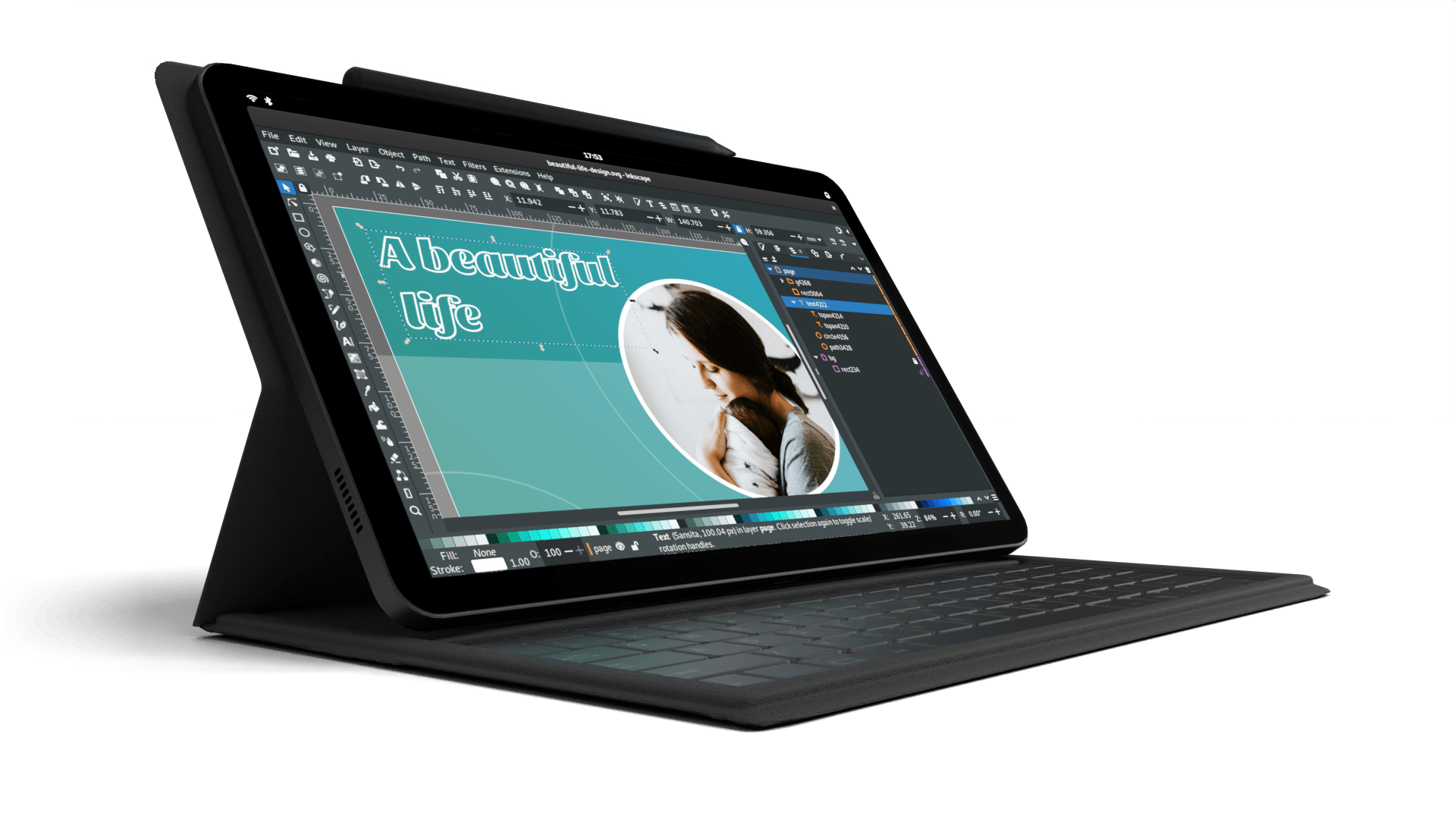 | Librem 11 | Out of stock | New Version in Development | |
 | Librem 14 | Out of stock | New Version in Development | |
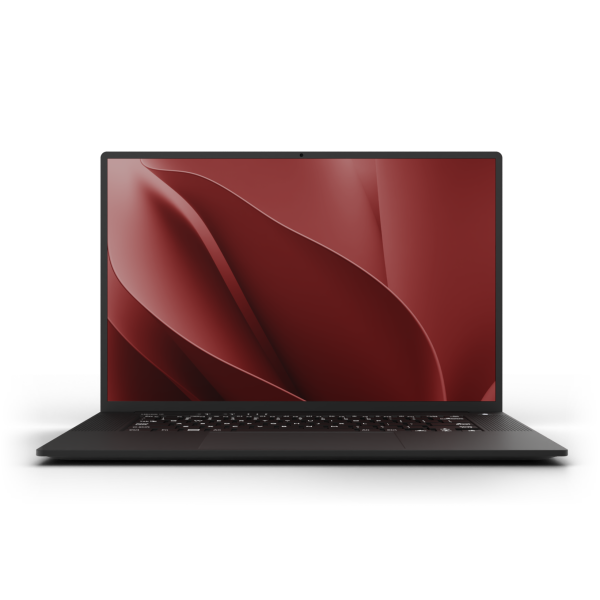 | Librem 16 | backorder ($2,899+) (up to 64GB/16TB) | Coming Soon | |
 | Librem Mini | Out of stock | New Version in Development | |
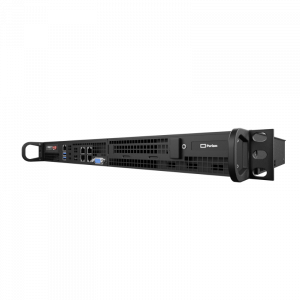 | Librem Server | In Stock ($2,999+) | 45 business days | |
 | Librem PQC Encryptor | Available Now, contact sales@puri.sm | 90 business days | |
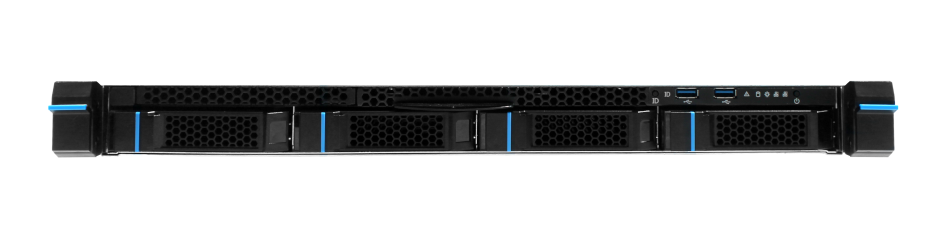 | Librem PQC Comms Server | Available Now, contact sales@puri.sm | 90 business days |
Recent Posts
Related Content
- A RISC-V Phone: The Librem 5 v2 For the Win
- Purism Launches Librem 5 v2 , A RISC-V Phone to Empower People
- The First Step Toward Digital Independence: Why AweSIM Matters
- PureOS Development Report: August 2026
- PureOS Development Report: July 2026

