Purism’s Product Philosophy in an Age of Government–Big Tech Convergence

Purism
Latest posts by Purism (see all)
- Purism Announces Launch of Its Librem 16 Laptop, the World’s Most Private and Secure Workstation - June 23, 2026
- Google’s Lock Down Policy - May 21, 2026
- Smartphone Study - May 21, 2026
Why Protecting Freedom Must Be Engineered, Not Promised
Purism exists because individual rights are no longer reliably protected by policy alone. In practice, they are determined by the design of the technology people are required to use.
The modern U.S. government no longer needs to openly censor speech or ban technologies to exert control. It can instead rely on a dense web of commercial platforms—cloud services, mobile operating systems, identity systems, and communications networks—that centralize power, identity, and data by design.
This is not accidental. It is the result of a mutual dependency:
- Government relies on Big Tech for scale, speed, capability, and innovation.
- Big Tech relies on government for contracts, legitimacy, and regulatory protection.
When power and infrastructure converge, individual liberty becomes collateral damage.
If technology is architected to serve institutions first, it will eventually be used against individuals.
A live example: Anthropic vs. the Department of War
This dynamic is no longer theoretical.
In February 2026, Anthropic—a leading U.S. artificial intelligence company—entered a public standoff with the U.S. Department of Defense (recently rebranded by executive order as the Department of War) over how its AI models could be used by the military. The dispute centered on Anthropic’s refusal to allow its systems to be used for two specific purposes: mass domestic surveillance of Americans and fully autonomous weapons systems without meaningful human control.
Despite Anthropic already operating inside classified government networks and holding a roughly $200 million defense contract, senior Pentagon officials issued an ultimatum: permit all lawful military uses of its AI models or face termination of contracts, designation as a “supply chain risk,” or potential compulsion under the Defense Production Act.
Anthropic’s leadership publicly rejected the demand. CEO Dario Amodei stated that while the company accepts the government’s authority to make military decisions, it cannot in good conscience remove safeguards that prevent mass surveillance of civilians or autonomous lethal decision‑making—arguing that current law has not kept pace with AI’s capabilities and that such uses pose serious risks to democratic liberties.
The Pentagon’s position was equally explicit: private companies may not impose ethical or technical limits beyond what the government itself deems lawful. Senior defense officials argued that allowing a vendor to restrict usage sets an unacceptable precedent, asserting that operational authority must remain solely with the state.
What makes this moment significant is not which side prevails—but what the confrontation reveals.
Anthropic is not a marginal actor. It is well‑capitalized, politically connected, and already deeply embedded in national security infrastructure. Yet even in this position, refusal to fully subordinate its technology to government demands triggered threats of exclusion, coercive legal powers, and reputational risk.
This episode demonstrates a structural reality:
Digital Rights are Under Corporate Control Who is Under Governmental Oversight
The government did not need to pass a new law, ban a product, or censor speech. It relied instead on procurement leverage, regulatory threat, and dependency pressure to attempt to compel compliance. This example may be around corporate policy, but other examples are around your individual privacy exploitation; they all mean the same thing: Other parties control your digital future.
This is precisely the failure mode Purism is designed to avoid.
Purism’s philosophy (as enshrined in the articles of incorporation) means: Purism allows whomever buys and owns a Purism product and runs Purism authored (free as in freedom) software to fully control their digital rights and digital future. Avoiding the corporate and governmental intrusion completely.
Likewise, Purism’s philosophy allows governments to buy and own Purism products—including free software—to fully control their devices from first boot through full operation, without restriction imposed by Purism. Any restrictions on use are provided by governments or in most proper cases: the voters of their governmental jurisdiction.
Buy and own your Purism product and feel what it is like to have True Privacy. Real Security. Absolute Freedom.
Purism Products and Availability Chart
| Model | Status | Lead Time | ||
|---|---|---|---|---|
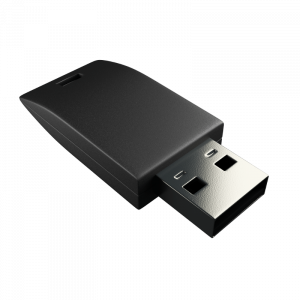 | Librem Key (Made in USA) | In Stock ($59+) | 10 business days | |
 | Liberty Phone (Made in USA Electronics) | Available on backorder ($1,999+) 4GB/128GB | n/a | |
| Librem 5 | In Stock ($799+) 3GB/32GB | 10 business days | |
 | Librem 11 | Out of stock | New Version in Development | |
 | Librem 14 | Out of stock | New Version in Development | |
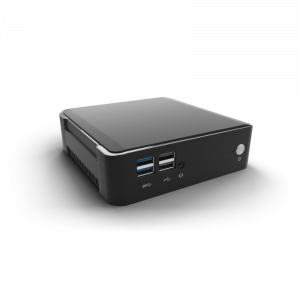 | Librem Mini | Out of stock | New Version in Development | |
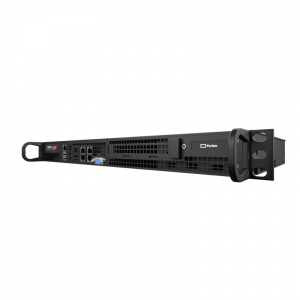 | Librem Server | In Stock ($2,999+) | 45 business days | |
 | Librem PQC Encryptor | Available Now, contact sales@puri.sm | 90 business days | |
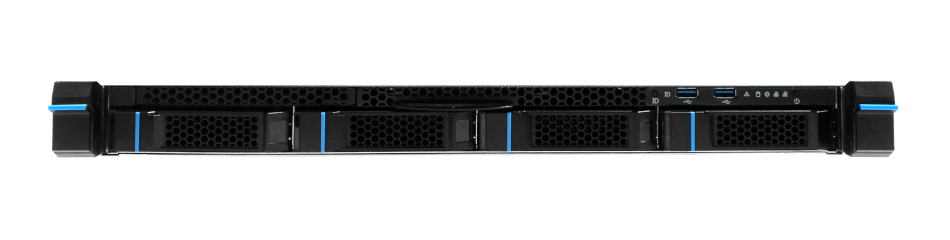 | Librem PQC Comms Server | Available Now, contact sales@puri.sm | 90 business days |
Recent Posts
Related Content
- Purism Announces Launch of Its Librem 16 Laptop, the World’s Most Private and Secure Workstation
- Google’s Lock Down Policy
- Smartphone Study
- DHS Inspector General Study
- Privacy Under Siege: Why Purism’s User Sovereignty Model is the Way Forward