Geofence Warrants, Location Data, and the Fourth Amendment in the Digital Age

Purism
Latest posts by Purism (see all)
- Purism Announces Launch of Its Librem 16 Laptop, the World’s Most Private and Secure Workstation - June 23, 2026
- Google’s Lock Down Policy - May 21, 2026
- Smartphone Study - May 21, 2026
A Technical and Constitutional Analysis.
Introduction
The Supreme Court’s consideration of geofence warrants represents one of the most technically and constitutionally significant privacy cases of the modern era. The core issue is whether bulk collection of location metadata—generated by consumer devices and cloud-based services—can coexist with the Fourth Amendment’s prohibition against unreasonable searches. As digital systems scale and sensors become ubiquitous, constitutional analysis must account for how technical architecture alters power dynamics between individuals and the state.
Technical Background: Mechanisms of Geofence Warrants
Geofence warrants function by defining a geographic boundary and a temporal window, then compelling service providers to disclose location records for all devices detected within those parameters. These records are typically derived from a fusion of GPS signals, Wi‑Fi access point triangulation, Bluetooth proximity data, and cellular network metadata. Although initially provided in anonymized form, such datasets are readily deanonymized through correlation analysis, trajectory matching, and iterative narrowing by investigators.
From a systems engineering standpoint, the defining characteristic of geofence warrants is scale. Traditional warrants begin with a suspect identifier and collect data narrowly scoped to that individual. Geofence warrants invert this process: they query entire datasets first and establish suspicion later. This reversal is not a minor procedural change—it is a fundamental shift in investigative architecture.
Location History as High-Risk Metadata
In privacy engineering, metadata is frequently more sensitive than content. Longitudinal location history exposes behavioral patterns such as religious attendance, medical visits, political participation, and social relationships. When aggregated over time, this data enables predictive profiling with precision exceeding many traditional surveillance methods.
Purism’s engineering philosophy emphasizes data minimization, local processing, and user control. Geofence warrants embody the opposite approach: broad data aggregation justified by post‑hoc filtering. This model dramatically increases the blast radius of any investigative error or abuse and undermines core principles of secure system design.
Fourth Amendment Analysis
The Fourth Amendment was explicitly drafted to prohibit general warrants—searches lacking specificity and probable cause. Geofence warrants, when applied broadly, closely resemble the very abuses the amendment was designed to prevent, differing only in implementation medium. Machine efficiency does not convert an unconstitutional search into a permissible one.
Arguments that users voluntarily surrender privacy by sharing data with third parties fail to reflect modern technological reality. Smartphones are not optional accessories; they are integral to participation in contemporary society. The Supreme Court acknowledged this in Carpenter v. United States, holding that pervasive digital data collection demands stronger constitutional protections regardless of third‑party storage.
Law Enforcement Utility Versus Systemic Risk
While law enforcement agencies emphasize investigative efficiency, security professionals recognize that capabilities tend to normalize over time. Tools introduced for exceptional cases inevitably expand in scope, leading to mission creep and secondary use. Any mechanism capable of identifying everyone present at a protest, church, or medical facility represents a latent systemic risk.
Robust constitutional constraints are not obstacles to effective policing; they are safeguards against the long‑term erosion of civil liberties. Narrow, particularized warrants preserve both public safety and public trust.
Conclusion: Engineering for Liberty
The Supreme Court’s geofence case presents an opportunity to reaffirm that constitutional protections do not diminish as technology advances. On the contrary, the power of modern data systems makes strict adherence to Fourth Amendment principles more necessary than ever. Warrants must remain specific, targeted, and grounded in probable cause.
At Purism, we believe freedom must be engineered into systems by design rather than enforced retroactively through trust. A free society depends on technical and legal architectures that make abuse difficult, not merely discouraged. That principle remains as vital in the digital age as it was at the founding of the Republic.
Purism Products and Availability Chart
| Model | Status | Lead Time | ||
|---|---|---|---|---|
 | Librem Key (Made in USA) | In Stock ($59+) | 10 business days | |
 | Liberty Phone (Made in USA Electronics) | Available on backorder ($1,999+) 4GB/128GB | n/a | |
| Librem 5 | In Stock ($799+) 3GB/32GB | 10 business days | |
 | Librem 11 | Out of stock | New Version in Development | |
 | Librem 14 | Out of stock | New Version in Development | |
 | Librem Mini | Out of stock | New Version in Development | |
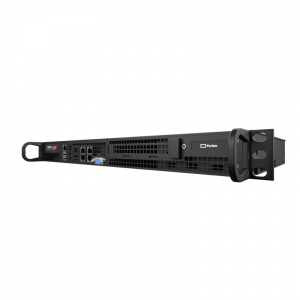 | Librem Server | In Stock ($2,999+) | 45 business days | |
 | Librem PQC Encryptor | Available Now, contact sales@puri.sm | 90 business days | |
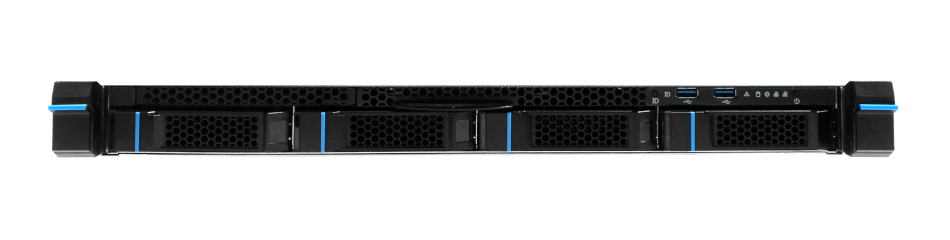 | Librem PQC Comms Server | Available Now, contact sales@puri.sm | 90 business days |
Recent Posts
Related Content
- Purism Announces Launch of Its Librem 16 Laptop, the World’s Most Private and Secure Workstation
- Google’s Lock Down Policy
- Smartphone Study
- DHS Inspector General Study
- Privacy Under Siege: Why Purism’s User Sovereignty Model is the Way Forward