
All the Unsung Awesomeness Purism Has Brought to Market

Purism
Latest posts by Purism (see all)
- All the Unsung Awesomeness Purism Has Brought to Market - November 24, 2026
- Why We Need a Revolutionary Phone Now: The Librem 5 v2 - November 23, 2026
- Librem 5 v2 Campaign Builds Early Momentum at 100 Orders - November 20, 2026
From a phone-sized Linux experience to hardware kill switches, Purism’s biggest contribution may be proving that a more user-controlled digital world can be built and shared.
The most important technology isn’t always the flashiest. Sometimes it’s the work that makes a different kind of technology possible: a phone that runs GNU/Linux instead of Android or iOS; a mobile interface other projects can use; a boot process checked with keys its owner controls; or a physical switch that cuts power to a radio.
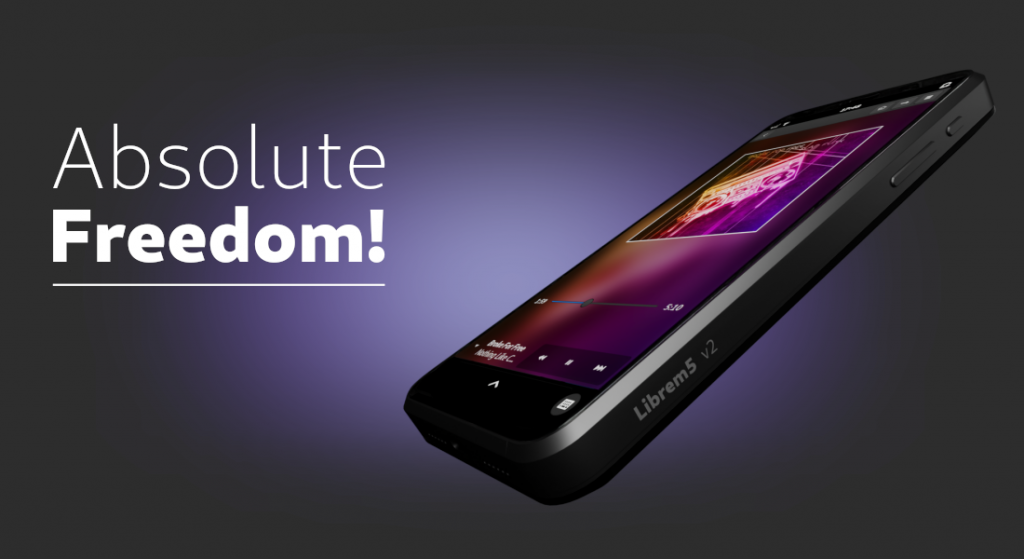
That thread runs through Purism’s Librem 5 v2 timeline and campaign and its differnatiators. Together, they describe an effort to build an alternative computing stack: from hardware and firmware to operating systems and apps.
The quiet breakthrough: making Linux feel at home on a phone
A Linux phone needs more than a Linux kernel squeezed onto a small screen. It needs a usable interface, a compositor, an on-screen keyboard, apps that adapt to different screen sizes, and the integration work that makes those pieces feel like one system. It takes investment from a team dedicated to the mission.
Purism’s inventions, innovations, and investments include Phosh, a mobile shell; Phoc, its Wayland compositor; and Squeekboard, an on-screen keyboard. The Librem 5 v2 FAQ also points our source code commits as evidence. Libhandy, Libadwaita, Stevia, Feedbackd, Calls, and Chatty are among the projects Purism has initiated, built, or contributed to. That distinction matters: these projects can spin off and have their own histories and collaborators, and Purism’s role has been in initiating, building, and investing in them—not exclusive ownership of every component—Purism invests in free software as a movement. The campaign FAQ lists the technologies in greater detail.
The achievement is that these pieces became part of a working mobile Linux experience and that the code is available for others to build on. Phosh and related components are used across the broader Linux ecosystem, thanks to Purism. That is the less visible kind of influence: creating missing pieces, maintaining them, and sharing the work beyond one product.
Convergence: one Linux system, many form factors
Purism’s convergence idea is straightforward yet ambitious: use the same free-software operating system across a phone, laptop, and desktop-like environment, adapting the interface to the screen rather than tying the user to a single device category.
The Librem 5 and Librem 5 v2 runs PureOS, and is a key factor in the effort to bring a GNU/Linux system from desktop to pocket. The practical promise is that users can carry familiar tools and workflows across devices, while developers can build software that adapts to different screens. Convergence is what Purism created, and yes beat Apple, Google, and Microsoft to reach it.
Security you can see—and control
Purism’s hardware choices make abstract security concepts tangible. The Librem 5 and Librem 5 v2 has physical kill switches for cellular, Wi-Fi/Bluetooth, and camera/microphone circuits. These features don’t solve every security problem on their own; but they give users direct, understandable control over specific hardware.
The security story also reaches below the operating system. PureBoot combines open firmware with tamper detection and keys controlled by the user. Instead of relying only on a manufacturer’s signature, the aim is to let the owner check whether the boot chain has changed. Purism invented anti-interdiction services for customers concerned about hardware tampering during shipment. Both are discussed in Secure Supply Chain and Made in USA Electronics.
Other details extend that philosophy: the cellular modem is separated from the phone’s main processor, and the Librem 5 (and v2) includes a smart-card reader for user-controlled cryptographic operations. These are layers of protection and control—not a promise that any one device is invulnerable.
Right to repair and the right to own
A device that cannot be opened, repaired, or meaningfully controlled is a fragile kind of freedom. Purism’s focus on modularity and repair pushes against that model. The Librem 5 v2 has removable cellular and Wi-Fi/Bluetooth modules, a removable battery, and a bootable SD card. It also is reusing the original Librem 5 chassis for the Librem 5 v2, offering a path (albeit skilled labor path) to upgrade rather than replace the entire device.
The bootable SD card is a small but useful example: it can hold an operating system separately from the phone’s internal storage, making it easier to experiment or recover. Purism’s Part 13: Modularity & Right to Repair explores the broader case for repairable, adaptable devices.
The Librem 5 v2: a new processor, and candid work still ahead
The Librem 5 v2 campaign includes a shift to RISC-V, an open standard instruction-set architecture, alongside an eight-core processor. It also lists upgrades such as 8 GB of memory, dual SIM, and a faster SD interface.
Purism is candid that the software stack still needs work, investment in this work is a key part of the campaign. Including graphics acceleration, peripheral support, application compatibility, browser performance, and power management as areas to develop. The ambition is clear: the Librem 5 v2 is not just a new handset specification, but a commitment to difficult platform work that could benefit the wider Linux ecosystem.
A different deal between people and technology
The Differentiator Series covers more than hardware and operating systems. Its topics include privacy, security, freedoms, avoiding Big Tech, convenience, convergence, secure supply chains, modularity and the right to repair, decentralization, ecosystem development, and funding the app gap. Taken together, they describe an approach in which technology should serve its owner—not turn the owner’s attention, location, or personal data into someone else’s asset.
That approach does not make every product perfect, or make difficult engineering problems disappear. It does make alternatives visible. A physical kill switch is a different answer to surveillance risk than a settings toggle. A user-controlled boot key is a different answer to firmware trust. A community mobile shell is a different answer to the assumption that phones must run software controlled by a small number of platform owners.
The movement is the real invention
Purism’s most consequential work may be the combination: hardware designed around user control, free software released for others to inspect and reuse, and a mobile Linux ecosystem that offers another path beyond the dominant phone platforms.
The unsung awesomeness isn’t one clever feature. It is the years of foundational work—interfaces, libraries, firmware, apps, documentation, hardware revisions, and community contributions—that make digital rights something people can use, not just talk about. The Librem 5 v2 campaign is the next chapter in that effort: technically demanding and rooted in the idea that people should own their devices and have a say in how they work.
Project links: Phosh · Phoc · Libhandy · Squeekboard · Stevia · Libadwaita · Feedbackd · Calls · Chatty · PureBoot · PureOS.
Recent Posts
Related Content
- All the Unsung Awesomeness Purism Has Brought to Market
- Why We Need a Revolutionary Phone Now: The Librem 5 v2
- Librem 5 v2 Campaign Builds Early Momentum at 100 Orders
- Price Is Not the Entire Point: How Purism is Building a Different Digital Future
- A RISC-V Phone: The Librem 5 v2 For the Win

