PureOS Development Report: June 2026

Purism
Latest posts by Purism (see all)
- PureOS Development Report: June 2026 - July 31, 2026
- PQC Encryptor Video Demonstration - July 9, 2026
- Celebrating 250 Years of US Independence With $250 Off the Liberty Phone - July 4, 2026
Bringing the latest to PureOS
Thanks for joining us again! In our May update, we mentioned that we’re bringing in updated dependencies as part of the goal to ship the latest Phosh desktop environment in PureOS Dawn.
PureOS is designed to provide the best experience on all Purism devices. Phosh, of course, receives a lot of attention as a cornerstone of the mobile experience on the Librem 5 and Librem 11. With Phosh being much younger than GNOME, it is especially valuable to stay on the latest release. Phosh was first released by Purism just seven years ago in 2018, compared to GNOME’s first release in 1999!
We build PureOS on the stable foundation of Debian, and we are grateful to the Debian project for providing this foundation. The narrower focus of PureOS compared to Debian enables us to bring in updates to Phosh and other cornerstone components, with the goal of flowing those improvements back to Debian as they are fully integrated.
Where two paths meet
There are two paths for new software to reach PureOS. We incorporate work from Debian, and we also build new work for PureOS that can flow back to Debian.
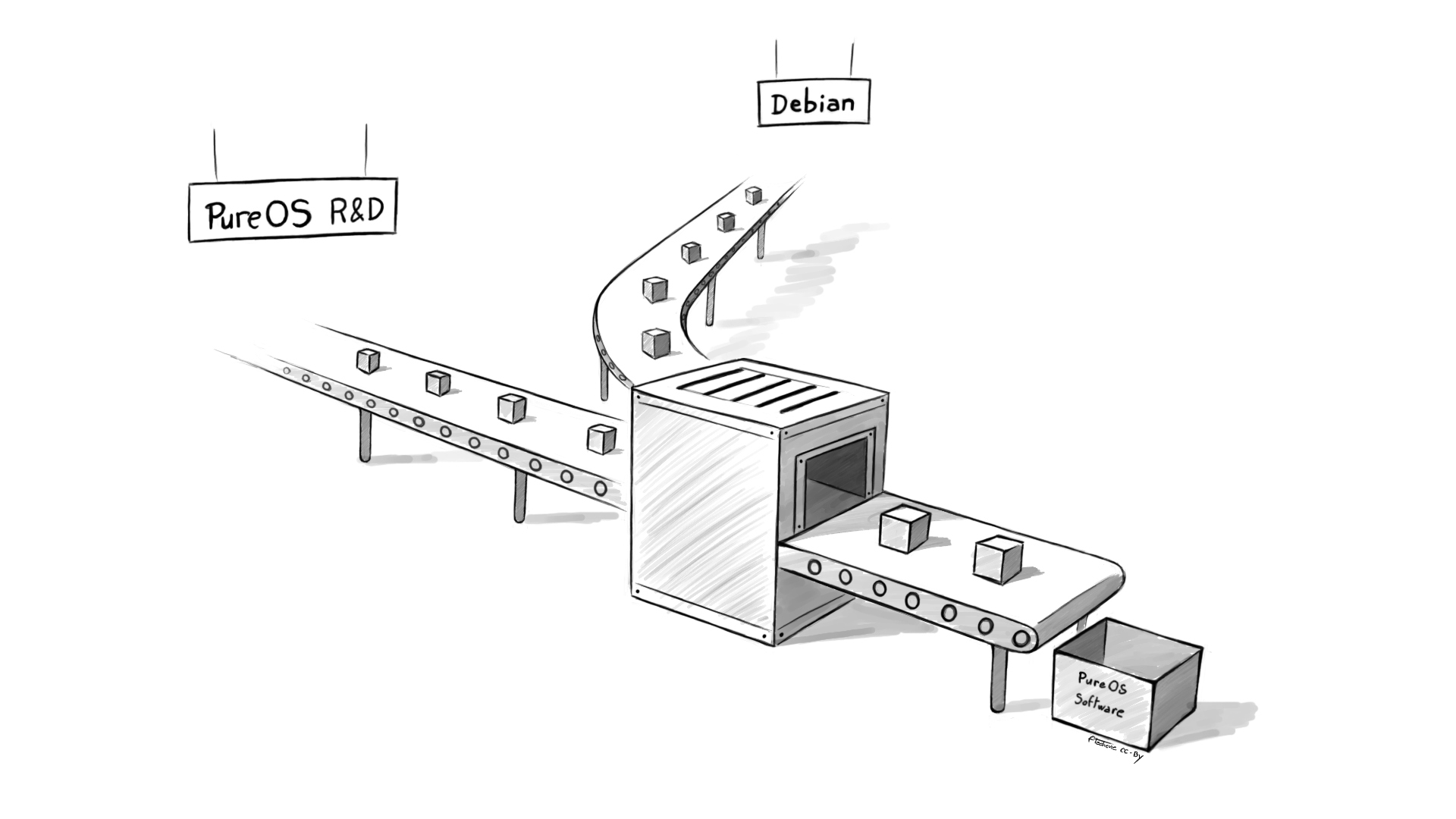
The Crimson development cycle had a big emphasis on the path from Debian. For Dawn, we’re doing a lot of work on both paths. That means there are new packages in PureOS’s developer staging area, “Octarine”, as well as the staging area for Dawn, called “Landing.”
Assembly
Octarine, Landing, and Dawn form a workflow that allows us to iterate quickly on new work while maintaining stability. Rapid and experimental work often happens in Octarine. Here, developers can upload experimental packages, which makes it easy to test them and get early feedback from others. Often, the work in Octarine is not directly releasable, but it facilitates development.
When work in Octarine stabilizes, we release those packages into Landing, often in small groups as we work up the dependency chains. Landing also synchronizes updates from Debian and receives stable development work, such as updating our patches and minor upstream updates. This is the staging area to ensure these updates all work together before they migrate to Dawn for release.
Packages from Landing migrate to Dawn as long as they meet the criteria checked by Laniakea, the PureOS repository manager. If they create any installation conflicts with other packages, then Laniakea will hold them. There is a waiting period for migrations too, based on the urgency of the update. Security updates (typically “critical” and “emergency”) will migrate immediately. Less urgent updates wait a few days for testers running Landing to validate them.

Filling the pipe
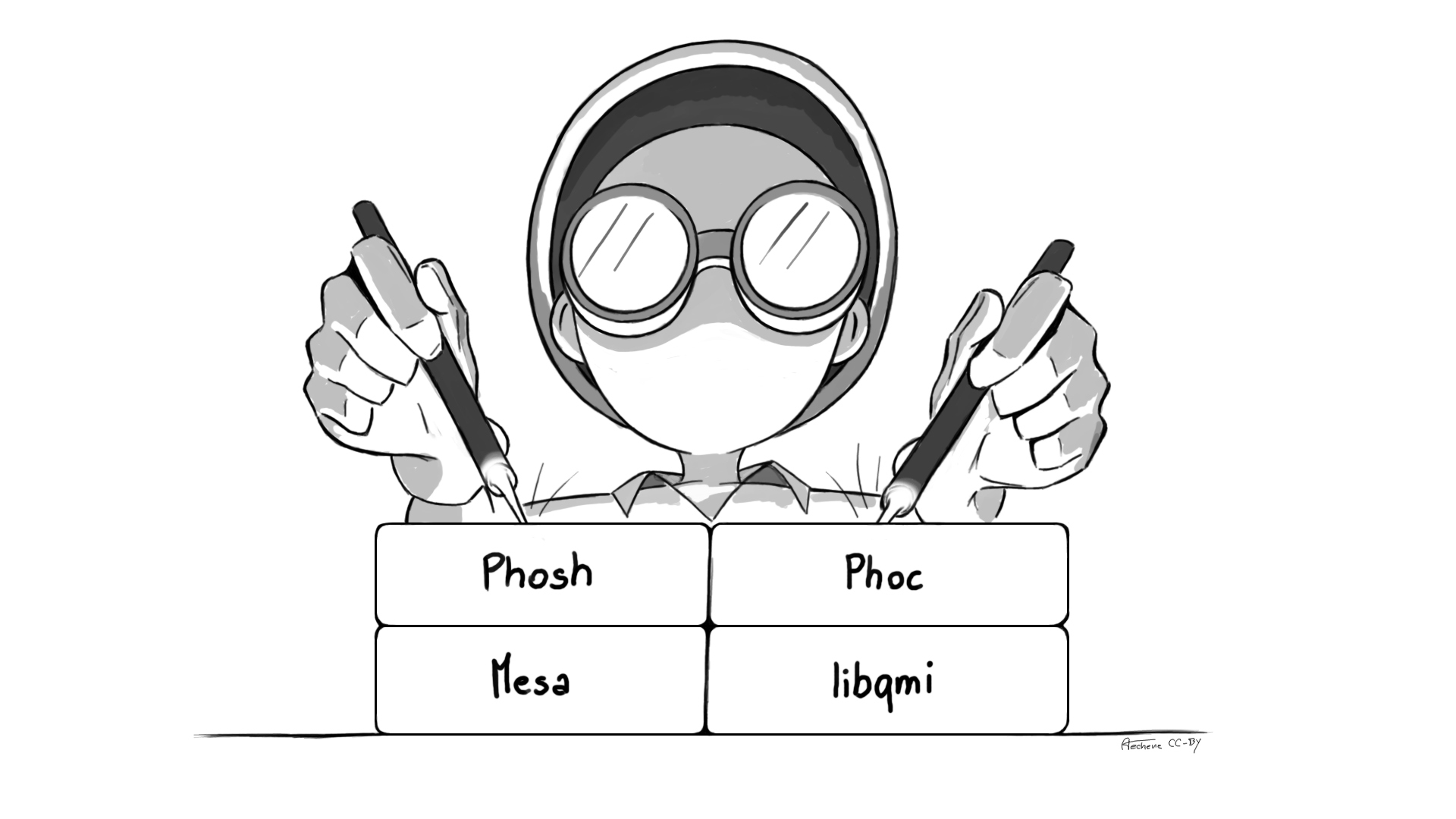
With the development pipeline in full swing, we’re updating some of the cornerstone components of PureOS for Dawn. Phosh and phoc are both updated to 0.55.0, the latest Phosh release in June. This is happening in Octarine since it’s a big jump from 0.46.0 in Debian Trixie, and as expected, Phosh needs more work to function correctly.
Mesa, the 3D graphics infrastructure, is now at 26.1 in Octarine. This is foundational work for bringing in the latest version of etnaviv, the driver for the Librem 5’s graphics chipset. 3D graphics are crucial to any desktop or mobile operating system. The desktop environment and many applications use 3D acceleration, even if they appear to be 2D.
We’re also planning to update ModemManager in PureOS Dawn for the latest improvements to modem connectivity. ModemManager uses libqmi to communicate with Qualcomm modems, and we’ve brought the latest libqmi to octarine.
In full swing
While this happens, Dawn is also incorporating updates from Debian Trixie. Components like GTK3 and SDL2 are up to date in Dawn, combining the updates in Trixie with the changes in PureOS. We fixed a possible deadlock in systemd for Dawn, and security fixes for yelp reached Dawn, Crimson, and even Byzantium. Finally, we updated the Linux kernel to the latest 6.12 point release for the Librem 5 in Dawn and Crimson.
We’re eager to get these updates into your hands, and there are many more updates coming. Thanks to all our customers and PureOS subscribers for making this work possible!
Recent Posts
Related Content
- PureOS Development Report: June 2026
- PureOS Development Report: May 2026
- Purism Announces Launch of Its Librem 16 Laptop, the World’s Most Private and Secure Workstation
- Google’s Lock Down Policy
- Smartphone Study